
The Hands That Remember: Jade By M&K's Ode To India's Living Crafts

Jade by Monica & Karishma unveiled its newest couture collection, The Hands That Remember, in Delhi at its flagship in Ambawatta One. Before a single model walked, the venue had already set the tone. Guests arrived to find artisans working around the space. For some, bandhani was tied into tight resist knots; ajrak blocks were pressed into cloth; kasab threads were pulled taut under practised hands. The entire process was visible and unhurried, even as the finished collection those same crafts had built moved past them on the runway. There was no separation between the making and the showing. Craft wasn't staged as a backdrop or atmosphere. It was, quite literally, the centrepiece of the room.

Founded by Monica Shah and Karishma Swali in 2008, the label draws on the four-decade legacy of Chanakya International, and always placed India's indigenous textile and embroidery traditions at the centre of its design philosophy. That commitment took formal shape in the Grassroots Artisans Project, launched in 2023 to mark JADE's 15th anniversary. The initiative was built to create a sustainable ecosystem for India's artisan communities, offering year-round livelihoods alongside design collaboration. Today, the project works across craft clusters spanning soof embroidery from Palanpur, bandhani from Bhuj, Pochampally ikat from Telangana, South Silk weaving from Salem, and batik and kantha from West Bengal.
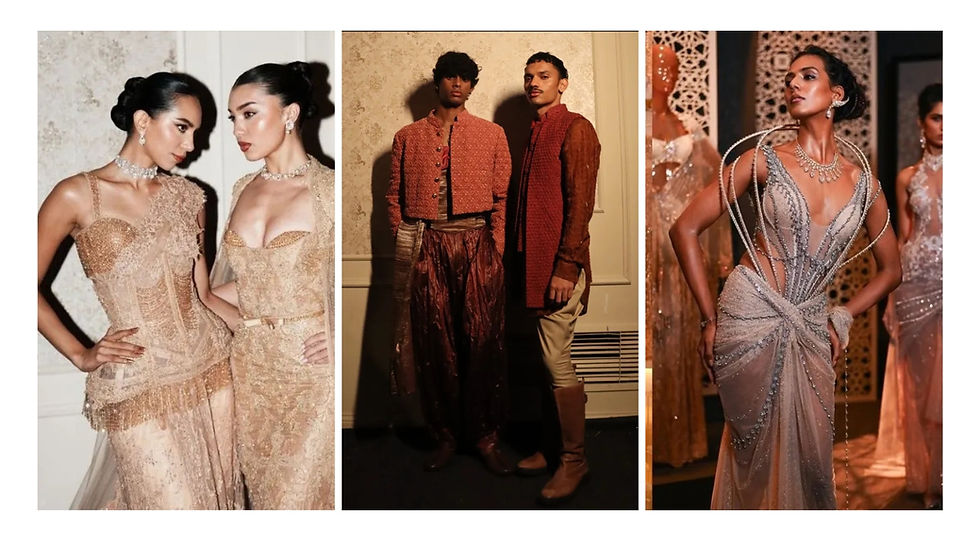
Drawing directly from this network, The Hands That Remember keeps Leheriya, bandhani, ajrakh, archival block prints and Banarasi weaves as its textile foundation, layered with the House's signature hand embroideries, moti bharat, ek taar, kasab and zardozi. Each piece is further enriched with considered patchwork that brings multiple craft traditions into a single, cohesive language. Rather than sitting as isolated techniques, these crafts are made to converse with one another, each retaining its own identity while contributing to something unified.
Choosing what made the final line-up wasn't simple, Shah admitted. With that many techniques and regions to honour, editing down to one cohesive collection meant leaving things out. Among everything she considered, archival block prints emerged as a personal favourite. These particular blocks, she said, "hadn't been used in roughly a hundred years, sitting dormant somewhere between museum pieces and forgotten tools". Reviving them meant tracking down the blocks themselves, understanding a technique that had fallen out of active use, and finding artisans who could bring a century-old method back into circulation. "Completely passionate for me," was how she described it, and it shows in how deliberately the prints are placed throughout the collection—treated less like a pattern choice and more like a small act of restoration.
"This work isn't simply handmade; it's handcrafted, carrying intention, mastery and knowledge passed patiently from one generation to the next." — Monica Shah
Bandhani and moti bharat carried a different weight altogether, a more personal one. Shah grew up with both techniques as part of her upbringing in a Gujarati household, which means they were always present and part of her visual language long before they became part of a couture line. "It's vibrant, it's so India," she said, and the phrase reads less like a design statement than a description of something lived in.
Behind the visual richness sits a quieter fact: time. Some of the embroideries in this collection took the better part of a year to complete. Shah revealed that the kasab lehengas alone took more than eight months, hand-worked embroidery that no machine could shortcut or replicate at speed. It is worth sitting with that number for a moment. Eight months on a single lehenga means months of an artisan's working life folded into one garment, a kind of labour that runs entirely counter to the pace fast fashion usually demands. In an industry increasingly built around speed, that timeline is itself a statement, and it echoes a distinction Shah points out: "this work isn't simply handmade, it's handcrafted, carrying intention, mastery and knowledge passed patiently from one generation to the next."
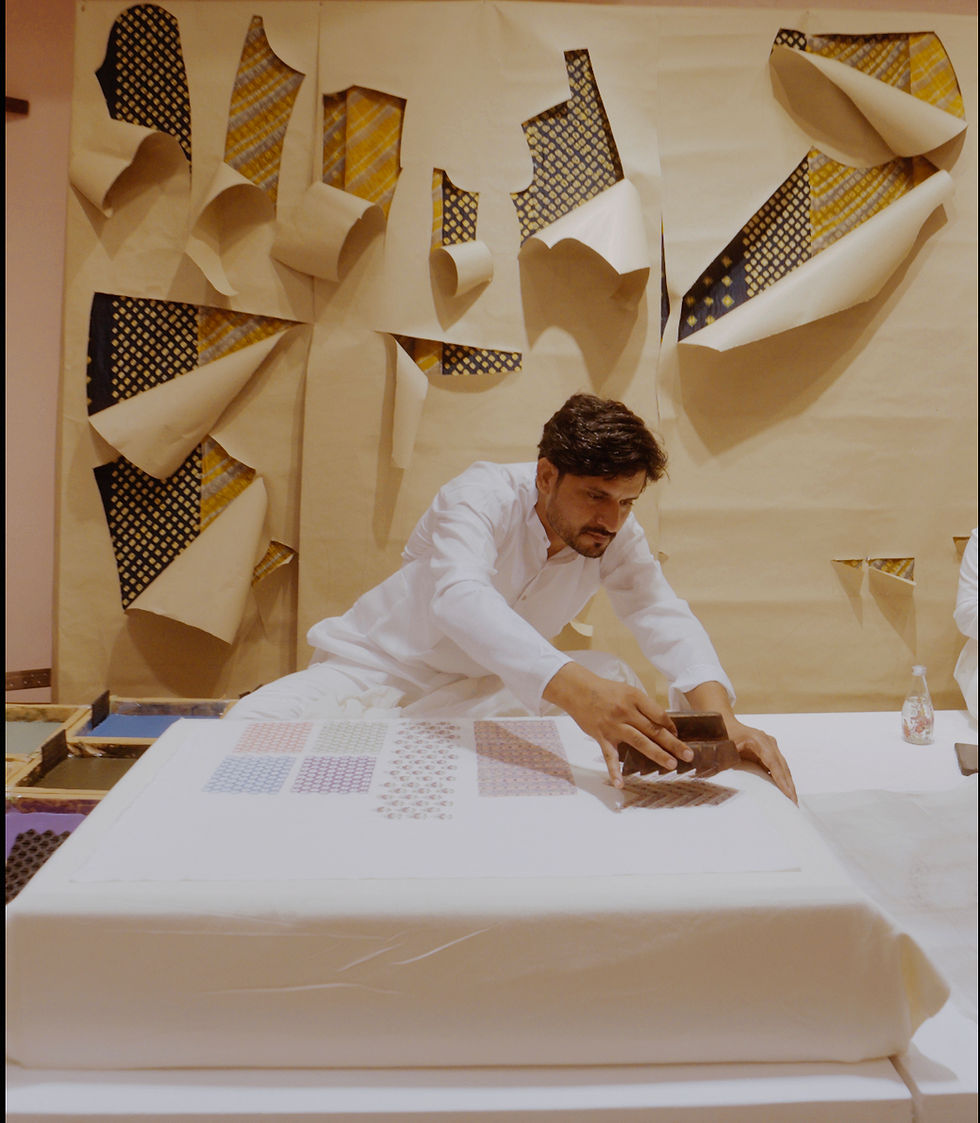
Monica's Personal Favourites
When asked about a piece from the collection she's secretly obsessed with, Shah pointed towards the tassel tops. "They look young, fun and just so versatile," she said, "easy enough to dress up with a saree, a lehenga, or, just as happily, a pair of jeans." It's a small, telling answer. For all the historical weight and artisanal labour behind the collection, what Shah reaches for personally is the piece that refuses to sit still in one context, the one that lets craft move through everyday life rather than staying reserved for occasion wear.
For the JADE muse, Shah notes, "craftsmanship has always been deeply personal, a pull towards pieces that carry meaning, history and permanence rather than simply occasion dressing. In wearing these crafts, the muse becomes part of a continuing legacy, carrying forward work that countless hands have preserved across generations."
The Hands That Remember reads, in the end, as her clearest statement of that belief yet: a room where artisans worked in plain sight rather than behind the scenes, a collection built region by region and technique by technique rather than smoothed into a single generic idea of "Indian craft," and hands, memory and story worn forward.


Comments