
Rerouted Travel: How the Middle East Crisis Is Changing Where Indians Travel in 2026
By Keshav Arya, Founder PureLuxe
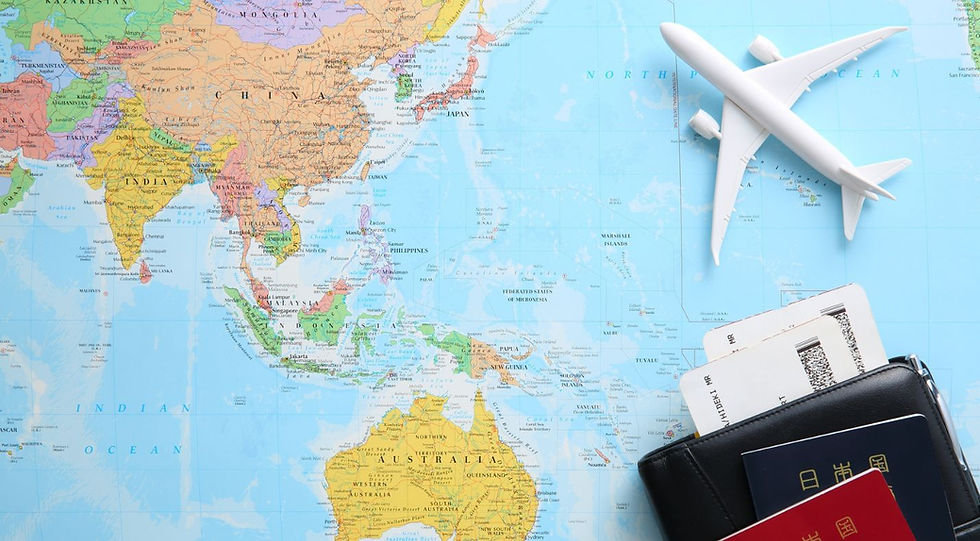
Thailand, Australia, Japan, Indonesia, Vietnam, Singapore, Malaysia, the Philippines, the Maldives, Mauritius, Sri Lanka, New Zealand, and South Korea… the map of travel is quietly being redrawn.
In light of the ongoing West Asia conflict and rising geopolitical tensions, travel has become a carefully orchestrated exercise. Routes are longer, airfares are higher, and safety is top of mind. This has led to a strong “Look East” trend, with travellers favouring destinations that offer ease of access, shorter travel durations, and a rich mix of cultural, culinary, and leisure experiences.
Last summer, a business class ticket to Paris via Dubai would cost around ₹2 lakh per person. Today, the same journey—now routed on Lufthansa or Air France—can cost anywhere between ₹4 to ₹5 lakh, as the Middle East is no longer a reliable transit corridor. Even securing these tickets has become increasingly challenging. That single data point captures the reality of Indian outbound travel today.
The ongoing conflict and airspace uncertainty across the Middle East have done something no pandemic, currency fluctuation, or visa complication ever fully achieved—it has forced India’s travel market to diversify. Not by choice, but by necessity. The long-standing default of flying Emirates or Etihad via Dubai or Abu Dhabi has become unreliable, expensive, and, for many, stressful.
The New Checklist
Planning a trip has fundamentally shifted. Three factors now dominate every conversation: stability, airfares, and weather. Stability means no airspace anxiety—no one wants to spend the week before departure refreshing flight status updates. When it comes to airfares, travellers are not necessarily looking for the cheapest option, but for predictability. And weather has become more critical than ever—if you’re paying a premium to escape the Indian summer, the last thing you want is to arrive at another 40-degree destination.

But this plays out differently across segments. A client spending $3,000 per night at Airelles in St. Tropez is unlikely to cancel Europe over airfare—they will absorb the cost and fly Swiss without hesitation. What concerns them is the possibility of disruption. For the mass-affluent traveller, typically spending around $700 per night, the shift is more decisive—they are redirecting entirely.
The Destinations Already Winning
While some of this redirection was already underway, the current crisis has accelerated it significantly. Demand for Vietnam, Thailand, and Indonesia has surged, with marketing investments in these markets increasing by over 100% in some cases. Travellers are prioritising politically stable destinations, boosting interest in East Africa (Rwanda, Uganda) and established safe havens like the Caribbean and Portugal. Long-haul alternatives such as the Maldives, Seychelles, South Africa, and South American destinations like Brazil and Peru are also gaining traction.
However, Japan continues to lead. The conditions are nearly perfect right now: a weaker yen that makes it genuinely good value, strong direct connectivity through All Nippon Airways (ANA) and Japan Airlines (JAL), and Air India, with Air India recently adding a new Mumbai route to the mix. The biggest draw is its cultural offering—food, ryokans, and the aesthetic of properties like Capella Kyoto or Janu Tokyo—that is nearly impossible to replicate elsewhere. The only real caveat is the crowds, which have become a genuine challenge during peak season. Savvy travellers are now looking beyond major cities to quieter experiences like Gora Kadan Fuji for its onsen and mountain setting, or The Ritz-Carlton, Nikko for something more offbeat.
South Korea is having a moment. Seoul has quietly built one of the most compelling city travel experiences in Asia, with skincare tourism, a remarkable food scene, and the global pull of Hallyu culture. Direct flights from Delhi make the journey seamless. Bhutan, meanwhile, is emerging as a counterintuitive favourite—highly stable, intentionally controlled in terms of tourism, and especially appealing during the spring months. Six Senses Bhutan remains a benchmark experience. It is stable almost by definition, with controlled tourism, strict entry requirements, and beautiful spring weather. Six Senses Bhutan remains the benchmark.
On the beach front, the Maldives and Seychelles tick every box: direct flights, no layovers, and zero geopolitical anxiety. Thailand continues to absorb mid-market and group travel reliably, though discerning travellers are moving toward more considered options. Six Senses Yao Noi, for instance, offers a level of privacy and design that most people don’t typically associate with Thailand.
Domestically, Vana in Dehradun reflects a broader shift rather than just a single standout property. Travellers who might have opted for European retreats are choosing Indian alternatives. Weather remains a limitation, and that’s where Ananda in the Himalayas, at 3,000 ft, becomes a natural summer choice.
What Summer Will Look Like
The next wave of winners is already taking shape for the May to September window. Indonesia beyond Bali is particularly exciting. The dry season begins in May, and properties like Nihi Sumba are genuinely world-class—the kind of destination that would be a go-to name if it were in the Maldives. For now, it remains relatively undiscovered by Indian travellers, offering a rare combination of exceptional quality, fewer crowds, and perfect timing.
Kenya and Tanzania are ideal for travellers seeking something truly different. A safari is one of the few experiences that resonates across generations. Few destinations can equally captivate a grandparent and a ten-year-old—and that shared wonder is what makes it memorable. The Great Migration adds urgency to summer travel, while high-end stays like Loirein Mara and Singita Serengeti House cater perfectly to families.
Mauritius appeals to families looking for longer, more immersive beach stays. With recent renovations at properties like Four Seasons Mauritius, it is one of the strongest offerings in the Indian Ocean. Australia, too, is gaining momentum—through the Indian summer, a genuinely outstanding food culture, and a level of familiarity that makes it an easier sell to first-time long-haul travellers. It has been underplayed by Indian travellers for a long time, and that seems to be changing.
Europe: Expensive, Aspirational, and Still Fully Booked
Let’s be clear, Europe isn’t struggling. The only limiting factor is the availability of business class seats. The routing has changed — with Lufthansa, Swiss, and Air France replacing Emirates as the preferred carriers — the destination itself hasn't changed at all. London, in particular, remains a key gateway, thanks to strong direct connectivity from Indian metros.
Hotel prices have not come down either. Strong demand from American and European domestic travellers means Indian clients aren't seeing much pricing relief. And those willing to spend ₹4–₹5 lakh on flights are equally prepared to invest in premium stays. Europe has always carried an aspirational weight for Indian travellers. Airspace disruptions don’t change that—they simply narrow the market to those who can afford the shift. And right now, those travellers are still going.
The Six-Month Outlook
Demand for outbound travel from India remains strong. The appetite to travel is not diminishing.
The key variable now is oil prices. A significant rise will impact airfares globally, not just routes involving the Middle East. Even travellers redirecting to Japan or East Africa will feel the ripple effect.
The Middle East has a problem that goes deeper than logistics. It has a brand problem. For years, Dubai and Abu Dhabi worked hard to stand for stability, modernity, and reliability. That positioning has taken real damage. Abu Dhabi and Qatar will work hard to differentiate themselves, but perception takes time to rebuild. And the Indian traveller who has discovered that Tokyo or Nairobi is perfectly reachable without a Middle East transit has learned something that will stick.

The Middle East faces a deeper challenge—one of perception. For years, destinations like Dubai and Abu Dhabi have built themselves as stable and reliable destinations. That positioning has been disrupted. While efforts to rebuild trust will follow, perception takes time to recover. Meanwhile, Indian travellers discovering alternative routes to destinations like Tokyo or Nairobi may not revert easily.
At a structural level, this moment exposes a larger issue. India’s long-haul aviation ecosystem has been heavily reliant on Middle Eastern carriers. Encouraging Air India’s wide-body expansion, strengthening bilateral agreements with European airlines, and building direct connectivity to East Africa and East Asia is now as much about national strategy as it is about travel convenience.
For now, the Indian traveller is doing what they’ve always done—adapting, recalibrating, and continuing to explore.
The destination changes. The appetite doesn't.



Comments