
A Guide to Exploring Arches National Park, Utah
Updated: Aug 25
By Vidhi Bubna

America is known for its pristine, well-preserved, and government-protected national parks that span millions of acres. Arches National Park, located in Utah, is one of the most popular national parks in America and is increasingly making it onto tourists’ national parks bucket lists. Of Utah's five national parks, Arches ranks second in popularity. Interestingly, Arches National Park also has the longest arch in the world, spanning 306 feet, and thus it comes as no surprise that Arches makes its way to every adventure traveller’s bucket list. What makes Arches unforgettable is the sheer density of formations scattered across the park. One arch appears behind another, each shaped differently by wind and water erosion over millions of years.
Formed over nearly 150 million years, Arches feels like a living reminder of time itself. Massive sandstone formations rise out of the desert floor in strange, almost cinematic shapes that make the landscape feel otherworldly. At moments, it genuinely resembles something out of a fantasy film — a kind of real-life Hobbitland carved entirely by nature. The park’s dramatic terrain has long attracted filmmakers. Scenes from films such as Indiana Jones and the Last Crusade and Thelma & Louise were shot around the wider Moab region because of its unmistakably rugged desert scenery. But beyond Hollywood, Arches also holds enormous palaeontological significance. Dinosaur tracks dating back millions of years can still be seen in the region surrounding the park. The wider region has long been important for dinosaur research, with countless fossils and prehistoric remains discovered across eastern Utah over the decades.

The park gets its name from the iconic arch-like formations scattered across the landscape. What struck me most was the sheer scale of it all — one arch after another, glowing in shades of rust-red and orange against impossibly blue skies. It’s the kind of landscape that humbles you instantly.

How To Explore

Driving through Arches National Park can be tricky, especially across its rugged backroads and uneven terrain. A rental car is probably not your best friend here. The narrow roads, overgrown foliage, and rocky terrain can easily leave your vehicle scratched up. That’s exactly why opting for a local expedition company like NAVTEC Expeditions makes the experience far smoother and far more immersive. Their guides know the park intimately — from hidden arches tucked away from tourist crowds to dinosaur footprints most visitors would otherwise miss entirely.
Arches is also home to over 483 species of plants and animals. Lizards casually dart across the rocks almost everywhere, while desert birds circle above the canyons. And if luck is on your side, you might even spot a desert bighorn sheep quietly navigating the cliffs in the distance.

Image Credits: Utah.com
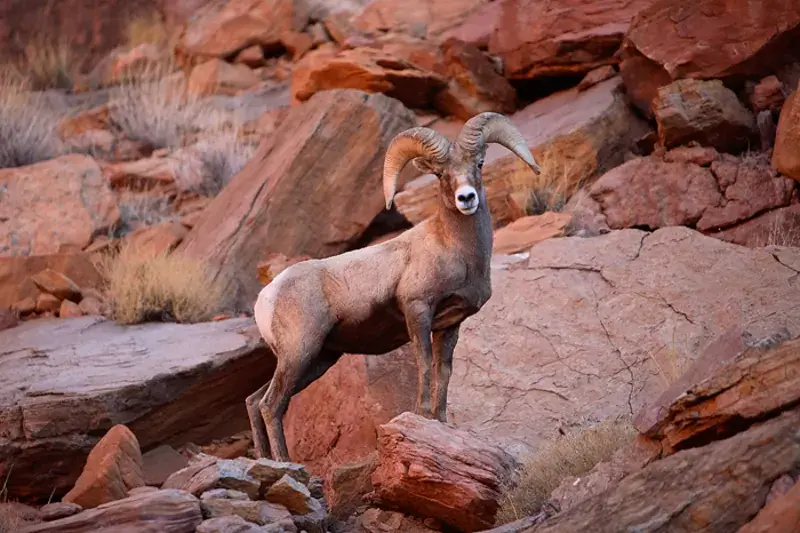
Image Credits: Nate Zeman
How To Get There

Image Credits: Trent Nelson | The Salt Lake Tribune
Moab is the closest town to Arches National Park and serves as the perfect base for exploring the region. The drive from Salt Lake City takes roughly four hours, but honestly, the journey itself feels like part of the experience. Utah’s landscapes constantly shift around you — endless desert roads, towering rock formations, and sandstone cliffs that almost look sculpted by hand.
From Moab, the entrance to Arches National Park is less than twenty minutes away. And yes, getting a photo beside the iconic Arches National Park sign outside the visitor centre is almost mandatory. Every traveller stops there, and somehow it never feels cliché.
Personal experience
My experience at Arches National Park left me awestruck. Despite being a frequent traveller, I had never seen natural arch formations appear in such overwhelming density before. The contrast of the bright blue skies against the deep red sandstone made the entire landscape feel cinematic. A pregnant woman stood near an arch and painted it on a canvas, possibly wanting to save the moment for her future generations. People walked hand in hand and climbed the arches.
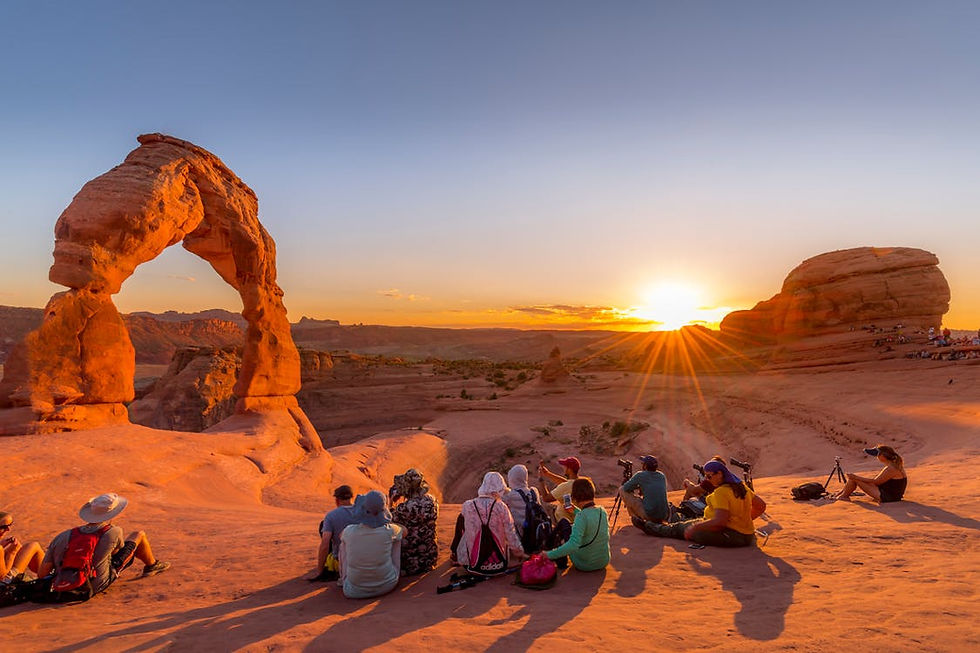
Amidst this nature, as I walked with five fellow travellers, I felt my heart open up and left with five new friends. It’s impossible to come here and not feel awe. There’s something about Arches that opens you up emotionally. Maybe it’s the silence, maybe it’s the scale, or maybe it’s simply the reminder of how small we are compared to nature.
The Windows Section is easily one of the most iconic areas within the park. Standing there feels almost extraterrestrial, surrounded by giant arches and massive sandstone openings carved naturally into the rock. The best and most accessible hikes in Arches National Park include Double Arches, Delicate Arch Trail, Windows Loop, Firey Furnace Loop, Park Avenue, and the Tower Arch Trail. Each of these trails is less than 4 miles round-trip.
Things To Do & Where To Stay

Image Credits: Campfires and Concierges
Moab Food Truck Park quickly became one of my favourite spots in town. The atmosphere feels lively and communal, almost like a mini festival every evening, where travellers and locals gather after long days outdoors. There are around 14 colourful food trucks offering everything from crepes and artisanal coffee to enchiladas, burgers, steaks, and gelato. The area almost looks like a festival where locals and tourists meet, often striking great conversations about culture and local adventure stories.

Image Credits: Story and Place
For vegetarians, Desert and Tropics Health Bar has various smoothie options whipped from moringa and spirulina. If there’s something unique about MOAB from other towns in Utah, it’s the smoothie culture here. Meanwhile, Moab Diner delivers that classic old-school American diner experience. Dripping in a red and white colour code, walking in honestly felt like stepping into a 1970s road trip movie. If you’re craving Asian food, Arches Thai is surprisingly authentic and offers several vegan-friendly Thai dishes alongside great Thai teas.

VOCO MOAB is located close to the city centre and works perfectly as a comfortable base while exploring the national park. What I loved most was how the rooms framed the surrounding sandstone landscapes outside, constantly reminding you that you’re in the middle of one of America’s most dramatic desert regions. The hotel also had thoughtful little comforts that felt especially welcome after long hikes — spacious bathtubs, cosy beds, and genuinely good breakfast options. Avocado toast and matcha tea became my post-hike ritual every morning.
One of the most unexpected parts of Moab was discovering its fascination with prehistoric fossils. Moab Rock Shop is filled with legally sourced dinosaur fossils, prehistoric shark teeth, and ancient rocks dating back millions of years. I even came across a Megalodon tooth — the massive prehistoric shark species that has inspired countless Hollywood films. It’s the kind of souvenir you definitely don’t expect to bring home from a national park trip, but somehow it perfectly fits the ancient energy of the region.
The weather at Arches can change dramatically throughout the day. Temperatures can range anywhere between 5°C and 30°C, depending on the season and time of day. The best months to visit are April to May and September to October. Summers become intensely hot, while winters can bring icy trails and freezing temperatures. Spring and autumn, however, offer the perfect balance of pleasant weather and clear skies.
MOAB fossil shop

Image Credits: Campfires and Concierges
*Arches National Park has an entry fee of USD 30 per vehicle. However, if you frequent national parks often, you can buy the annual pass for USD 80 as a US citizen or USD 200 as an international traveller.


Comments