
How Indian Botanicals Are Changing the World of Homegrown Gins

Updated: Jun 16

For a long time, gin was simple: juniper, London Dry, and perhaps a bottle of Hendrick's, Roku, or Bombay Sapphire behind the bar. But in recent years, as more consumers have embraced the spirit and several homegrown brands have entered the market, the demand for gin has reached new heights, even amid the rise of tequila. At the same time, Indian gin makers have begun looking closer to home, sourcing unique ingredients from their own landscapes.
India is, and has always been, the world's spice cabinet. Cardamom, the third most expensive spice on earth, has been cultivated on the Malabar coast since before recorded trade. Tulsi grows in nearly every courtyard. Kokum has been souring curries on the Konkan coast for generations. "India has always had a deep relationship with botanicals and aromatics through its cuisine, spice traditions, Ayurveda, and perfumery," says Akshay Sikri, Director of Food & Beverage at The St Regis Mumbai. "As a result, Indian gin makers have access to an incredibly diverse pantry of flavours that naturally lend themselves to gin production." These ingredients existed long before gin did. The question was never whether they belonged in a still. It was simply whether anyone would think to put them there.
When India starting producing gin, most came from Goa. In 2017, Nao Spirits launched Greater Than, India's first craft gin, followed almost immediately by Hapusa — a gin built around foraged Himalayan juniper, turmeric and raw mango that produced something rare: a genuinely savoury spirit, earthy and wildflower-fresh, unlike anything being made anywhere else. A year later, Stranger & Sons arrived from Third Eye Distillery, distilled with nine botanicals sourced almost entirely from the farms of the Konkan and Malabar coasts — Gondhoraj lemon, Nagpur orange, black pepper, nutmeg, mace, cassia bark — a gin that went on to take gold at the International Wine and Spirits Competition in London. The category, once a footnote in India's drinking culture, had become a story worth telling internationally. Diageo recognised it early, acquiring Nao Spirits earlier this year for ₹130 crore.
What has followed is a wave of distillers pushing further into the subcontinent's pantry, and what's striking is how granular the storytelling has become. "What makes Indian gin particularly exciting is that it is not simply 'Indian' in a broad sense," Sikri observes. "It is increasingly hyper-local. Kokum from the West Coast, Himalayan juniper from the north, Gondhoraj lime from the east, spices from the Malabar Coast — all contribute their own identity while still allowing juniper to remain the backbone. Crucially, juniper itself hasn't been left alone in this process — it's being actively experimented with, and the results are raising the bar for what the whole category can be. Jishnu AJ, Creative Director at 8ish, puts it plainly: "India has more than twenty varieties of oranges growing across the country. Indian botanicals have developed an identity of their own globally, and that's what helps them stand out from the more classic botanicals traditionally used in gin." Vaniitha Jain, founder of Vanaha, is careful to add a note of discipline to the excitement: "Local ingredients are important only when they are used with intent. They should not be there just because they sound interesting or Indian. Each botanical must add something meaningful to the liquid, whether it brings freshness, depth, warmth, texture or a memory of place." It is, she says, not about how many Indian botanicals you can name; but how well they mingle with each other and still allow the gin to remain a gin. Ansh Khanna and Samarth Khanna, founders of Himmaleh Spirits, have taken that philosophy to the Kumaon hills, building their gin around ingredients native to that specific region. "Indigenous botanicals not only deliver unique flavours but also allow the brand to celebrate local heritage, support local community, and offer consumers an authentic taste of the Himalayas that cannot be replicated elsewhere," they say.
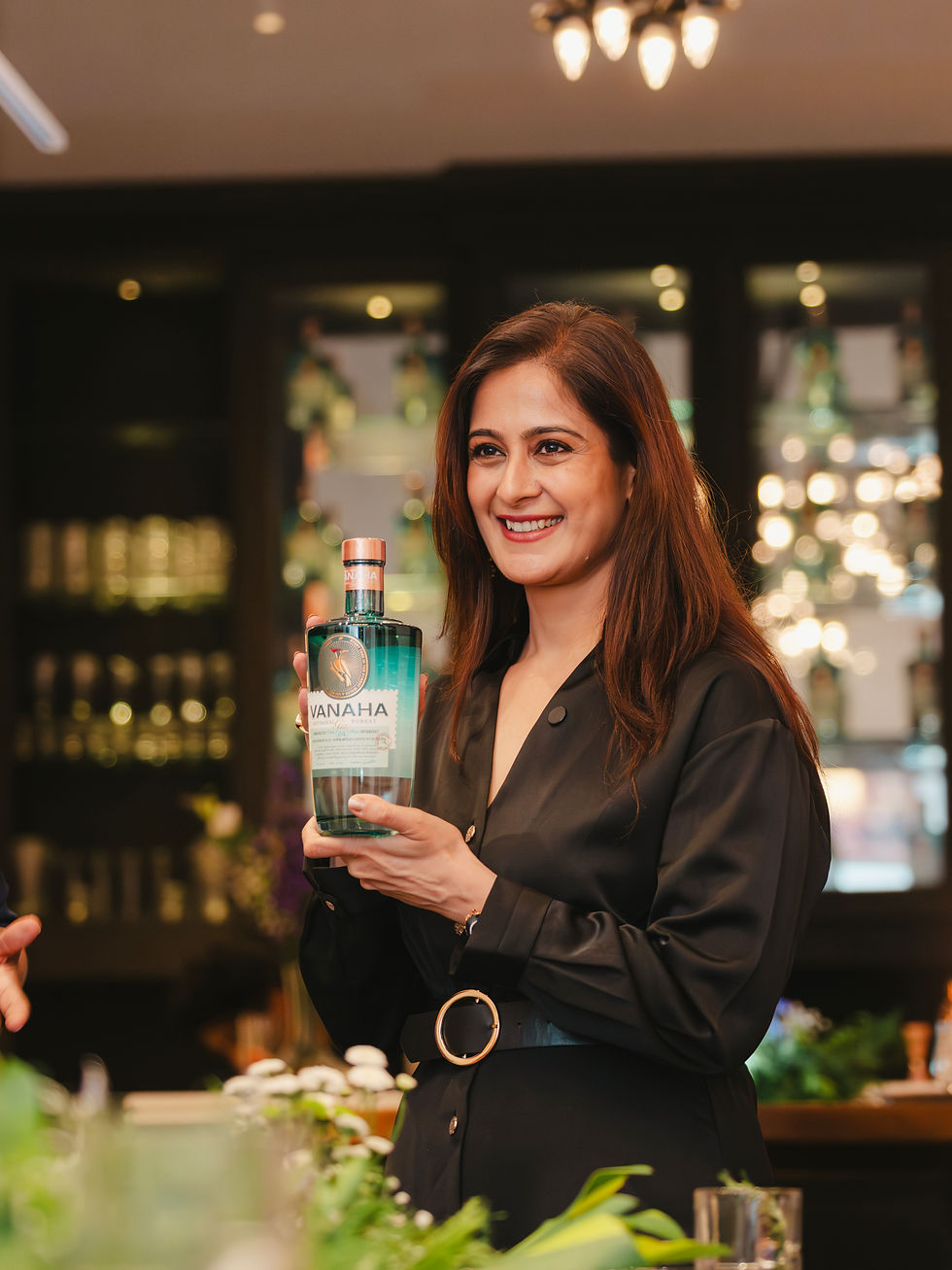
There is something deeper here, something beyond flavour. "For a long time, Indian spirits tried to imitate European identity instead of trusting their own landscape," says Fay Barretto, Bar Director at DU hospitality. "Once brands started using ingredients people actually grew up smelling, eating, healing with, or cooking with, gin became more emotionally connected to this part of the world instead of feeling imported culturally." It is, she suggests, less a category innovation than a kind of homecoming.
What these distillers understand and what distinguishes the best Indian gins from mere botanical tourism is that putting an interesting ingredient in a bottle is the easy part. Making it behave in distillation is another matter entirely. Lemongrass carries its aromatics in water-soluble compounds rather than alcohol-soluble ones, which means a distiller working with it must adjust the ABV of the charge or risk losing the very quality that makes it worth using. Cardamom can be crushed to increase oil extraction, but push it too far and the result is stewed and flat rather than warm and aromatic. Mayukh Hazarika, founder and CEO of Cherrapunji Eastern Craft Gin, is direct about it: "Every botanical must justify its place in the final spirit. Distillers have to think beyond what is available locally and focus on what actually translates through distillation." The still, as any serious distiller will tell you, is a brutal editor.

The botanicals that survive it, though, do remarkable things. Sahil Kaushal, Head Mixologist at Milagro, notes how each one reshapes the gin differently: "Kokum adds subtle tartness and bright fruit character, lemongrass introduces fresh citrus aromas, cardamom lends warmth and spice, coriander enhances freshness and complexity." Barretto goes further, arguing that Indian ingredients bring qualities that European botanicals simply don't have: "Tulsi changes the freshness completely, kokum brings acid structure differently from citrus, cardamom changes texture and aroma at the same time." Juniper, everyone agrees, still anchors the spirit. It just speaks with a different accent now.
Of all the botanicals turning heads at the moment, kokum comes up again and again from distillers and bartenders alike. Jordan Salvadore, Restaurant Manager at JW Marriott Mumbai Juhu, has watched guests encounter it for the first time: "Most people expect gin to lean towards citrus or floral notes, but kokum introduces a refreshing tartness with gentle fruit character that feels both familiar and unexpected." Mikhail Singh, Partner at Gallops, finds the same. "Many people associate it with coastal Indian cuisine and refreshing summer drinks rather than spirits. When used in gin, it contributes a delicate fruity acidity and subtle tanginess that people often don't expect." Sikri has built an entire cocktail around it — The Bay at Sahib Room & Kipling Bar, a gin-kokum-mint-lime serve inspired by Mumbai's coastal heritage. "It demonstrates how a regional ingredient can add depth and character while complementing the floral and citrus notes already present in the spirit," he says.
The surprises don't stop there. Barretto points to lomba — a fruit that most people approach expecting sweetness and instead meet something saline, tart, almost smoky depending on the extraction. Seabuckthorn, she notes, does something similar: intensely alpine and sharp in a way nobody quite expects from an Indian ingredient. Hazarika's work draws on equally unfamiliar territory — Khasi mandarin, smoked tea, Kaji Nemu, and sohiong, a wild berry from the hills of Meghalaya that carries a sweet-tartness unlike any European fruit. "People come to the gin without knowing what sohiong is," he says, "but leave talking about it." For AJ, it is Hapusa's use of locally foraged Himalayan juniper that still surprises: "The flavour is quite different from what most people expect from juniper and offers a unique sense of place." He singles out Cherrapunji and Vanaha, too — both, he says, "almost taste like an Indian forest in a glass."From the Himmaleh stable, the Khannas point to an entirely different set of surprises: timur pepper, kinnow, galgal and black haldi — a botanical quartet that most drinkers have never encountered in a gin. "Timur adds a unique citrusy brightness with a gentle tingling sensation, kinnow brings juicy sweet citrus notes, galgal offers vibrant Himalayan lemon freshness, and black haldi contributes earthy spice and depth," they explain. Together, the four create what they call a distinctly Himalayan flavour profile and consistently stop people mid-sip.

The cocktail culture building around these gins is as considered as the distilling. At Sweeney, a mango-thyme gimlet sits at the intersection of two worlds — Thai mango against European thyme, served with a fermented chip, mango gel and toasted thyme freckles. At JW Marriott Mumbai Juhu, Salvadore's Shore to Soul is poured into a handcrafted clay cup, a deliberate choice. "The clay cup adds an earthy, tactile element that reinforces its coastal inspiration," he says, "creating a deeper sensory connection between the guest and the ingredients." Singh advocates for two to three drops of saline solution — twenty parts salt to eighty parts water — added to any gin serve. "It just brings up the flavours of the liquor or cocktail," he says.
Which brings us, inevitably, to the glass. On this point, the city's bartenders are in rare agreement: it matters more than most people think. "Gin is an aromatic spirit," Barretto explains, "so glass shape changes how botanicals hit your nose before the liquid even touches your palate. A wide balloon glass amplifies aromatics and softer florals, while a tighter glass can sharpen structure and make the drink feel drier." Jain is equally precise: "A narrower glass can concentrate the botanicals and make the nose feel more intense, while a wider glass allows the drink to breathe and feel more relaxed and expressive. For a botanical-forward gin, the right glass can help reveal the layers more clearly instead of flattening the experience." AJ draws the sharpest distinctions — sipping gins like Cherrapunji, Vanaha and Hapusa, he argues, are best served over ice in an Old Fashioned glass, where their botanical depth can be appreciated slowly, while London Dry-style Indian gins like Greater Than work beautifully with tonic or soda in a highball. The glass isn't decoration. It's architecture.
To taste any of these properly, the advice is consistent: start neat, before anything else intervenes. A nosing glass if possible. The first aromas are the most honest; they tell you what the distiller was actually thinking. Then the palate: citrus and florals at the front, the body of the gin in the mid-palate, and at the finish, the botanicals that have been waiting quietly throughout. "Much of gin's complexity is experienced through the nose," Salvadore says. "Understanding the ingredients and intent behind a well-crafted serve transforms the experience from simply enjoying a drink to appreciating its story, craftsmanship, and sense of place." The Khannas add a practical note that often gets overlooked: "Pay attention to temperature and dilution. Serve your gin well chilled with quality ice, and give it a moment to open up as it slowly dilutes. A small amount of water can reveal different layers of botanicals and aromas, making the experience far more balanced and enjoyable." "Much of gin's complexity is experienced through the nose," Salvadore says. "Understanding the ingredients and intent behind a well-crafted serve transforms the experience from simply enjoying a drink to appreciating its story, craftsmanship, and sense of place."
It is, as Hazarika puts it, how a distiller tastes a spirit — not as a single moment, but as a journey from aroma to palate to finish. The Indian gin category is barely a decade old. It has already won gold in London, attracted the attention of the world's largest drinks company, and introduced an entire generation of drinkers to ingredients they couldn't name five years ago. Sohiong. Lomba. Kaji Nemu. Gondhoraj. Names that meant nothing to most people once, now the reason someone orders a second round.
That, more than any market projection or medal, is what tells you something lasting is happening here. The botanicals were always this good. Indian gin is simply, finally, letting them speak.


Comments