
The Drag Path: A Dive Into The Lives Of Drag Artists In India

Updated: Jun 13

It is in the dire times in history that we witness art forms that defy the very structures that isolated their origin. Drag is one such art form. In the 16th century, when the church forbade women from performing, men would perform the roles previously played by women. Dazzling outfits, prominent eye makeup, thick liners and luscious wigs. Drag might have taken a longer route back home, but it’s here, and it’s blossoming.
In 2026, trans rights became weaker both internationally and in India. With the early tides of conglomerates boasting of Pride back in 2022 and donning a rainbow, the tide shifts to isolation and murky marketing in 2026. Even after that, drag in India persists. The drag artists at Kitty Su, The LaLiT Properties, practice their art as an extension of themselves. Their expression is tied to their art and livelihood alike.
To Be a Drag Artist In India

“Being a drag artist in India, where drag is still niche and evolving, is a great superpower that comes with great responsibility. We’ve been carving our own path and setting standards for future generations of performers,” says Betta Naan Stop, Artist Programmer and Regular Performer at Kitty Su. Drag is still in its early phase in India, with the audience limited to queer-adjacent demographics and elites. The first few generations of drag artists in India have to carry the weight of defining how drag evolves and is perceived.
Becoming a drag artist comes with its own set of challenges, primarily financial. “You don’t have to be rich to do drag, but you do need resources, determination, and the willingness to run around and make things happen”, comments Betta. Depending upon the type of drag, it is the artist who has to bear the initial costs of costumes, makeup and accessories.
Drag requires consistency and perseverance because the art form is less celebrated and has fewer platforms supporting it. “You really have to push through and make your own space, and space for your drag avatar in this world. Therefore, it takes an emotional toll on you as well,” expresses Lush Monsoon, Drag Artist and Lawyer.
Drag is about introspection and expression. It's about donning the most vibrant colours and presenting one’s best capabilities. Even if the lore beneath the bold and spectacular exterior is that of an artist living paycheque to paycheque.
Familiarising With Desi Drag

“Drag basically draws heavily from the culture that exists, and we have such a rich heritage and culture, including pop culture, Bollywood, our traditional folk culture and folk dances, and our classical art, etc., which you’ll be able to see at our Kitty Su June Pride nights. “ comments Lush Monsoon. The drag scene in India borrows inspiration from the West and mixes it with the performance art practised in the country, making it unique to its performers and their iterations.
When asked about Desi Drag, Betta elaborates on the term, saying, “ The desi drag scene is incredibly vibrant. You get everything you’d expect from drag, but with a desi tadka. That’s where all the flavour is. It’s fun, it’s loud, it’s tadakedar, and it’s full of masala.” The artists also draw inspiration from mythological figures, classical dance, and their regional cultures, bridging their interpretation of queerness to the stage.
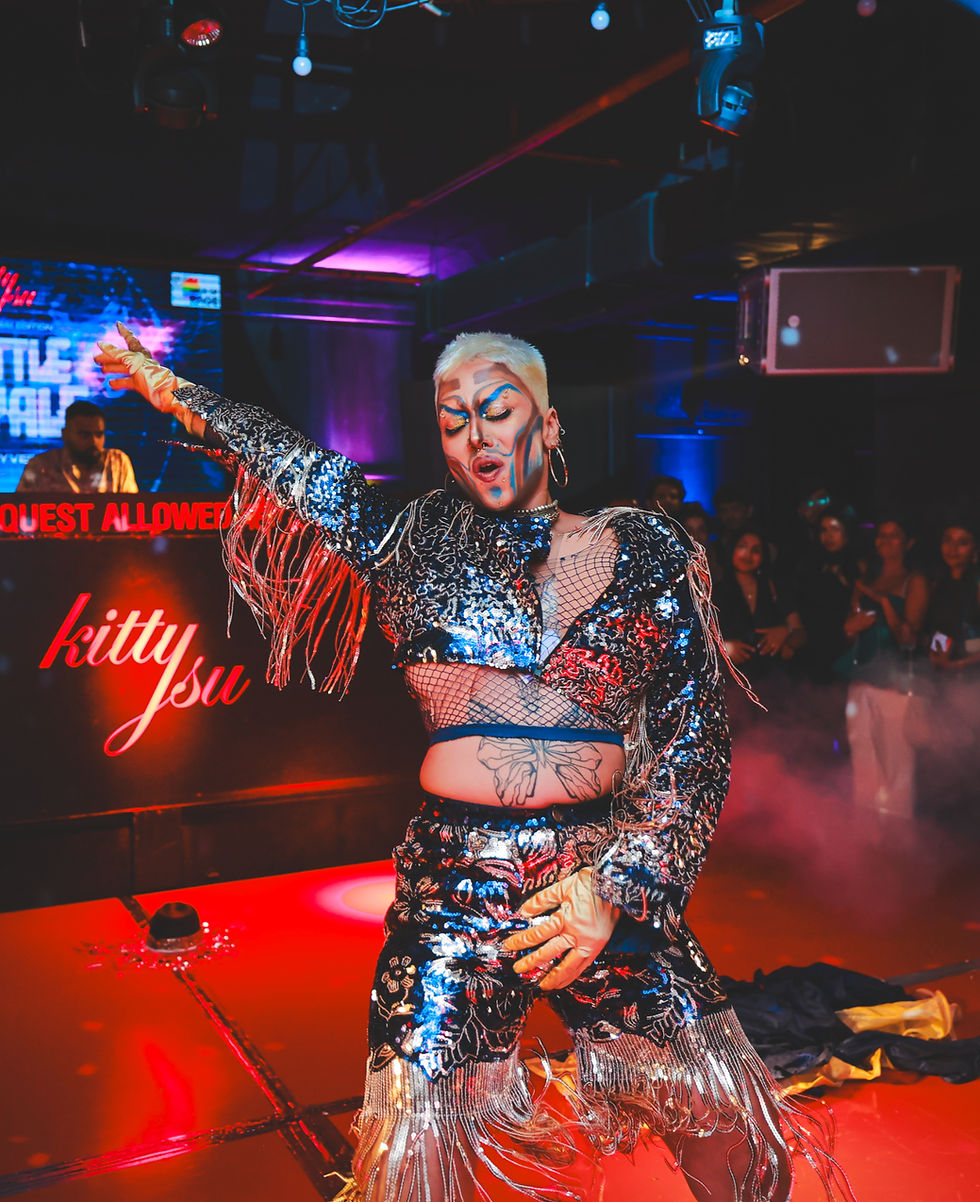
On being a drag king themselves and on the rarity of a drag king being identified when talking about the art, Mx. Stallion, Drag King Artist, says, "For the drag Kings, a scene is still being made. Every drag king has their own flavour to bring to the table, a story to tell, and we just need to look out for the shows when they happen. We need to start showing up more and supporting the drag kings as well, to let us know that the culture that we are trying to create has the potential to grow and keep existing."
Curating Spaces for Artists

“What I want for drag artists in India is respect. Not tolerance but respect,” comments Seventeen K. Sins, Artist. She further emphasises the need for more diverse stories. Stories in regional languages with more experimentation on stage and more of South Asian narratives that are original to the natives. She concludes, "The future of Indian drag is incredibly bright, and I want a world where the next generation of drag artists spends less time fighting to exist and more time creating art.”
The drag scene in the country is still taking shape. Mx. Stallion believes it is high time we have more opportunities and more platforms in the field. “And as for the future, I would love to see more community spaces involving drag in their lineups, be it music, art galleries, festivals, theatre or comedy," says Mx. Stallion, Drag King Artist. Having recently cameoed in a Netflix production, they believe that visibility and on-screen roles, when given to drag artists, make them feel seen.

On curating a healthy and welcoming space for drag artists in the country, Vikas Narula, Founder of Depot 48, says, "Drag depends on reading the room and on an audience that's genuinely present, not distracted or distant. When the space is designed so that a forty-seat room has no bad seat, no dead corner, the performer has a different kind of power. They're working with the room, not against it.”
Drag is not restricted to one genre; it can be based on jazz one day and ghazal the next. Creating a space for artists also requires creating a room for experimentation that is flexible across various genres. Narula concludes, "For a drag performer or any artist who's used to being an afterthought in the hospitality calculus, walking into a room where the acoustics were designed around you, where you keep what your audience paid, where the stage has hosted everything from ghazal to experimental performance without hierarchy, that feels different. “


Comments