
How BTS Helped Rewrite the Rules of Global Modern Menswear
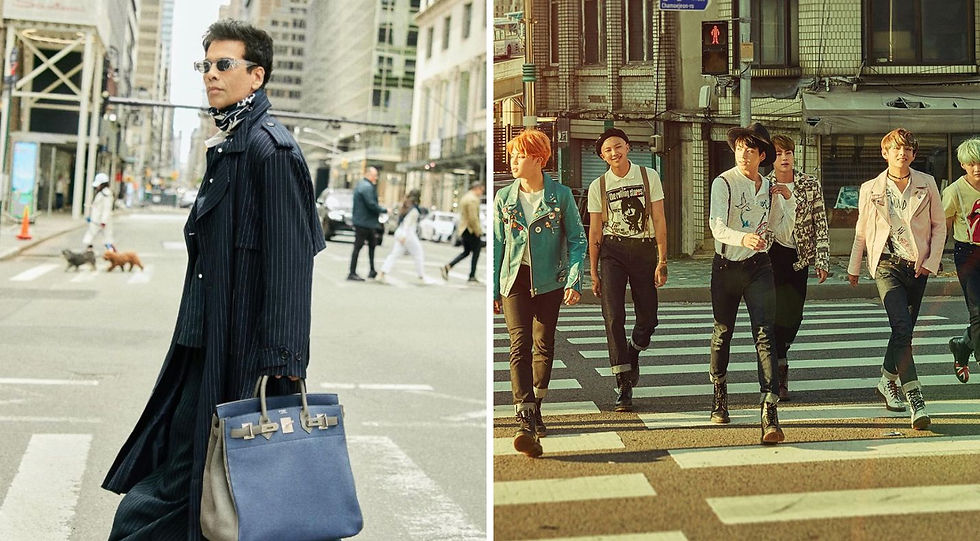
There was a time when men’s fashion followed a fairly narrow script. Safe colours, predictable silhouettes, and just enough variation to feel current without standing out too much. Even in pop culture, experimentation usually came in small doses. Then over the past decade, that approach started to loosen, and if you look at how that shift played out in mainstream culture, BTS has been a consistent part of that conversation.

Their fashion didn’t arrive fully formed. In their early years, around their debut and the 2 Cool 4 Skool in 2013 to the Dark & Wild era in 2014, the styling leaned heavily into hip-hop-inspired streetwear. Think oversized fits, heavy layering, bold graphics, and coordinated group looks. It reflected both the K-pop system at the time and global streetwear trends. It was sharp, but also quite uniform.

The shift began gradually around The Most Beautiful Moment in Life (HYYH) era in 2015. The music turned more introspective, and the styling followed. Softer palettes, lighter fabrics, more relaxed silhouettes. It felt less like performance wear and more like clothing that carried emotion. That transition continued into Wings and then Love Yourself, where individuality started to take centre stage.

By the time they reached Map of the Soul, in 2020, each member had a clearly defined personal style that extended beyond stage outfits. Kim Taehyung (popularly known as V) became known for his interest in vintage-inspired tailoring and classic silhouettes. Park Jimin consistently experimented with fluid fits, sheer fabrics, and jewellery, pushing against more traditional ideas of menswear. Jeon Jungkook leaned into oversized streetwear and minimal basics, closely aligned with global Gen Z dressing. Min Yoongi often favoured understated, pared-back looks, while still engaging with luxury fashion when required.
This evolution didn’t happen in isolation. It coincided with a broader shift in menswear globally. Designers and artists were already questioning rigid ideas of masculinity, but BTS brought that shift into everyday visibility on a massive scale.
There are clear parallels with artists like Harry Styles, who embraced gender-fluid fashion in editorial and performance spaces, and Bad Bunny, who has challenged norms through styling choices like painted nails and unconventional silhouettes. The difference is that BTS presented this evolution collectively and consistently over time, rather than through isolated moments.

Luxury fashion houses responded accordingly. BTS became global ambassadors for Louis Vuitton in 2021, marking a significant crossover between K-pop and high fashion. Individual members have since built relationships with brands like Dior and Celine, reinforcing their influence within the industry.
What’s changed more quietly is how this has filtered into everyday dressing. Men are more open to experimenting with silhouettes, accessories, and textures. Wider trousers, layered jewellery, softer fabrics, and a mix of streetwear with tailoring are no longer limited to fashion-forward circles. These shifts aren’t solely because of BTS, but their visibility has helped normalise them.
That’s what their fashion evolution really reflects. In India, stars like Karan Johar and Ranveer Singh have always challenged the idea of menswear. While upcoming brands like Shop Darwaza are a nod to this philosophy. Not a single trend, but a broader cultural change. Menswear is no longer about staying within fixed boundaries. It’s about range, comfort, and the freedom to move between different expressions without needing to justify it.
And that shift, more than any one outfit, is what defines where menswear stands right now.


Comments