
Solid Perfumes Are Booming, But Do You Need To Get One?

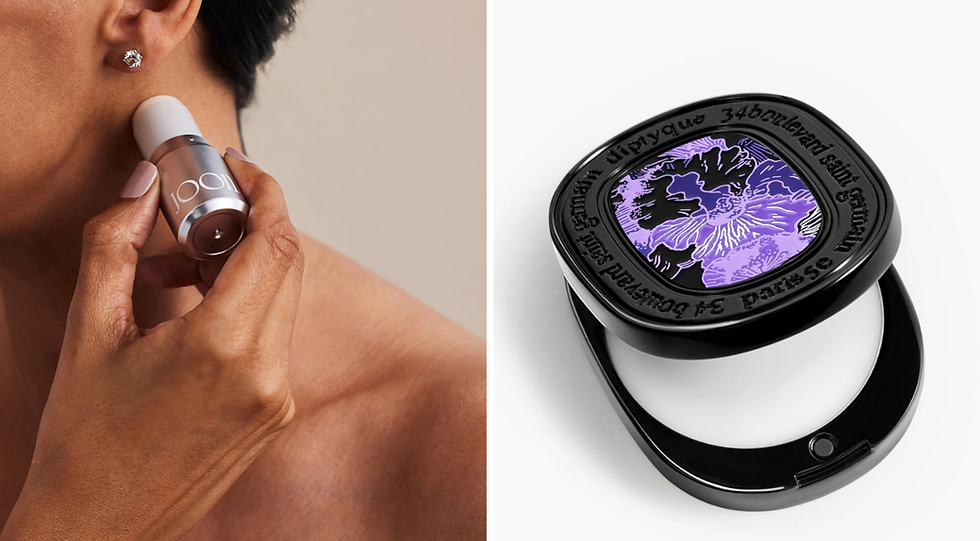
There is something incredibly satisfying about carrying a perfume that fits into the palm of your hand. No bulky bottle, no fear of leaks ruining your handbag, and definitely no awkward cloud of fragrance after one enthusiastic spray. Solid perfumes are back, and they are the beauty trend quietly taking over. Sahar Mansoor, Founder of Bare Necessities, in agreement with the rising trend, says, "They offer an intimate scent experience, are spill-proof and travel-friendly, and come with minimal packaging, making them a practical, low-waste alternative to conventional perfumes."
But why are they suddenly such a rage? The renewed interest has been attributed to the do-it-yourself videos on TikTok, where creators experiment with turning fragrances into balm-like formulas using waxes, and the launch of beautifully designed solid perfumes by heritage fragrance houses and contemporary beauty brands. Add to that the growing emphasis on sensorial beauty experiences from brands such as Diptyque and Glossier, and solid perfumes have become far more than a novelty. They now sit at the intersection of fragrance, skincare and collectible beauty objects.
What is a solid perfume?
NOYZ Solid Fragrance Bag Charm Diptyque Solid Perfumes NOYZ Solid Perfume
But what is a solid perfume? “Solid perfumes are made with waxes and oils that melt into the skin, releasing scent more gradually. The result is a longer-lasting, more intimate fragrance experience that stays close to the wearer rather than projecting into the room,” say experts from Joon. While liquid perfumes tend to stick to your clothes, solid perfumes are strictly made for skin application. Rather than being a substitute for their liquid counterparts, solid perfumes are an intersection of skincare and fragrances.
Unlike conventional liquid perfumes, most solid fragrances are housed in sleek tins, compact cases or lipstick-like sticks, with the primary focus on longevity rather than projection. Solid perfumes are designed to be dabbed or swiped onto pulse points such as the wrists, neck and behind the ears, rather than sprayed into the air. The idea is for the fragrance to gradually melt into the skin and develop throughout the day, making it feel deeply personal rather than overwhelming. On the contrary, liquid perfumes with alcohol-based sprays provide a burst of projection; solid perfumes are built for daily routines. “Liquid perfumes use alcohol as the carrier, which evaporates quickly and allows the fragrance to diffuse into the air,” says Dimple Fouzdar, Founder & Creative Director at Maison de Fouzdar. A traditional Eau De Parfum is alcohol-heavy, and aerosols even more so. This allows a trail of fragrance to be left behind moments after application, sometimes at the cost of longevity.
Solid perfumes are far from a new invention. In fact, fragrance balms have existed for thousands of years, with evidence of scented waxes and ointments dating back to ancient Egypt, where perfumed balms formed an important part of daily grooming rituals. Yet, despite their long history, they have found fresh relevance in 2026. But can they replace our trustworthy liquid perfumes?
The Rising Popularity
Sol de Janeiro Jelly Perfume Balm Bare Necessities Garden Of The Eden Solid Deodorant Glossier You Solid
But why are they suddenly everywhere? Part of the answer is simple—they fit beautifully into how we consume beauty today. We are carrying smaller bags. We are travelling more. We are looking for products that multitask. And if they happen to double up as beautiful objects sitting on our vanity? Even better.
In 2026, consumers are increasingly drawn to beauty products that feel good, and solid perfumes fit perfectly into this. Let's start with the most obvious — packaging. Solid perfumes come in compact packaging, making them practical for handbags, travel and everyday touch-ups. But just as important as convenience are aesthetics. Brands like NOYZ and Diptyque have transformed solid perfumes into collectables. What started as packaging made for less spillage and rough terrain is used as an accessory.
But the real essence lies in the scent profile. For years, fragrance was all about projection—the stronger, the better. Today, many people are leaning towards scents that stay close to the skin instead. Solid perfumes come with a subtle scent, making them a more popular choice. “Many of our customers use our solid perfumes as their everyday fragrance because they appreciate the natural, skin-friendly formulation and the subtle scent that lasts through the day," says Sahar. As Joon's fragrance experts explain, "In a solid format, every fragrance feels more rounded and intimate because it stays closer to the skin, creating a personal scent without compromising on impact."

You can't deny the power of social media in creating much of the buzz; it definitely deserves some credit. TikTok has a habit of making us want products we never knew existed. Solid perfumes are no exception. Between creators turning their favourite fragrances into homemade perfume balms and luxury brands releasing refillable fragrance compacts that look impossibly chic, it was only a matter of time before the format went mainstream.
Finally, there is the rise of niche perfumery. “Solid perfumes tend to attract a niche audience that’s curious about the format or looking for something different, rather than becoming a mainstream alternative,” says Dimple. And in an era where individuality is almost a currency, that makes perfect sense.
Longevity in Solid Perfumes
One would assume that longevity is the best suit of a solid perfume. But, perfumers beg to differ. “I’ve tested numerous solid perfumes from well-known international brands while researching them for my own brand, and I consistently found that they lasted significantly less than a good-quality liquid perfume. Most disappeared within about an hour on my skin,” comments Dimple. This highlights that ultimately longevity depends on the fragrance oil concentration in a perfume rather than its form (whether it comes in a liquid or solid base).

Removing alcohol changes how a perfume behaves, but it does not necessarily increase its staying power. Instead, it reduces projection, meaning the fragrance remains close to the skin instead of radiating outward. Since solid perfumes are applied only to the skin and not to clothing, the chances of the formulation wearing out faster are increasingly high. Ultimately, performance comes down to the quality of the formulation.
Are the solid perfumes replacing the liquid ones?
While solid perfumes are on vanity shelves for many, they will not replace liquid fragrances. Rather than replacing traditional perfumes, solid fragrances are carving out their own niche. They appeal to consumers interested in conscious consumption, travel-friendly beauty and unique fragrance experiences, while liquid perfumes continue to dominate occasions where projection and longevity are priorities.
In many ways, solid perfumes complement rather than compete with traditional fragrances. Much like traditional attars, many solid perfumes offer familiar scent profiles that can easily be layered with other fragrances without overwhelming them. Some people use them on their own for everyday wear, while others apply them as a base before layering a liquid perfume on top to enhance longevity and create a more personalised scent.
Though solid perfumes perform well with subtle notes, not every fragrance works in a solid format
Rich notes like sandalwood, vanilla, amber and musk thrive in wax-based formulas because they are naturally long-lasting. “Fresh citrus notes, aquatic accords, green notes and many delicate florals often lose their brightness in a solid format. These notes rely on volatility to create freshness and sparkle, and the wax base tends to suppress that effect,” says Dimple.
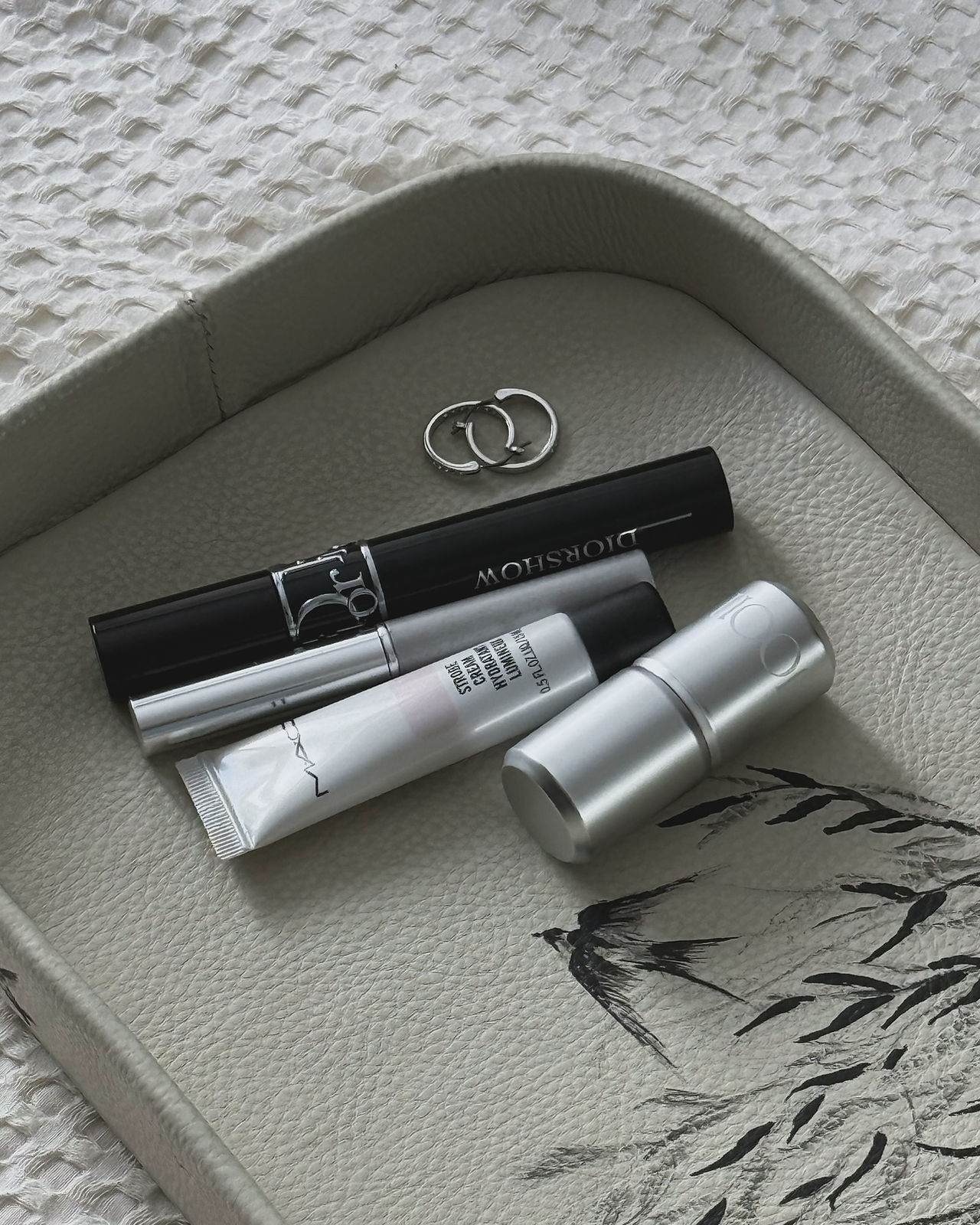
Joon Solid Perfume 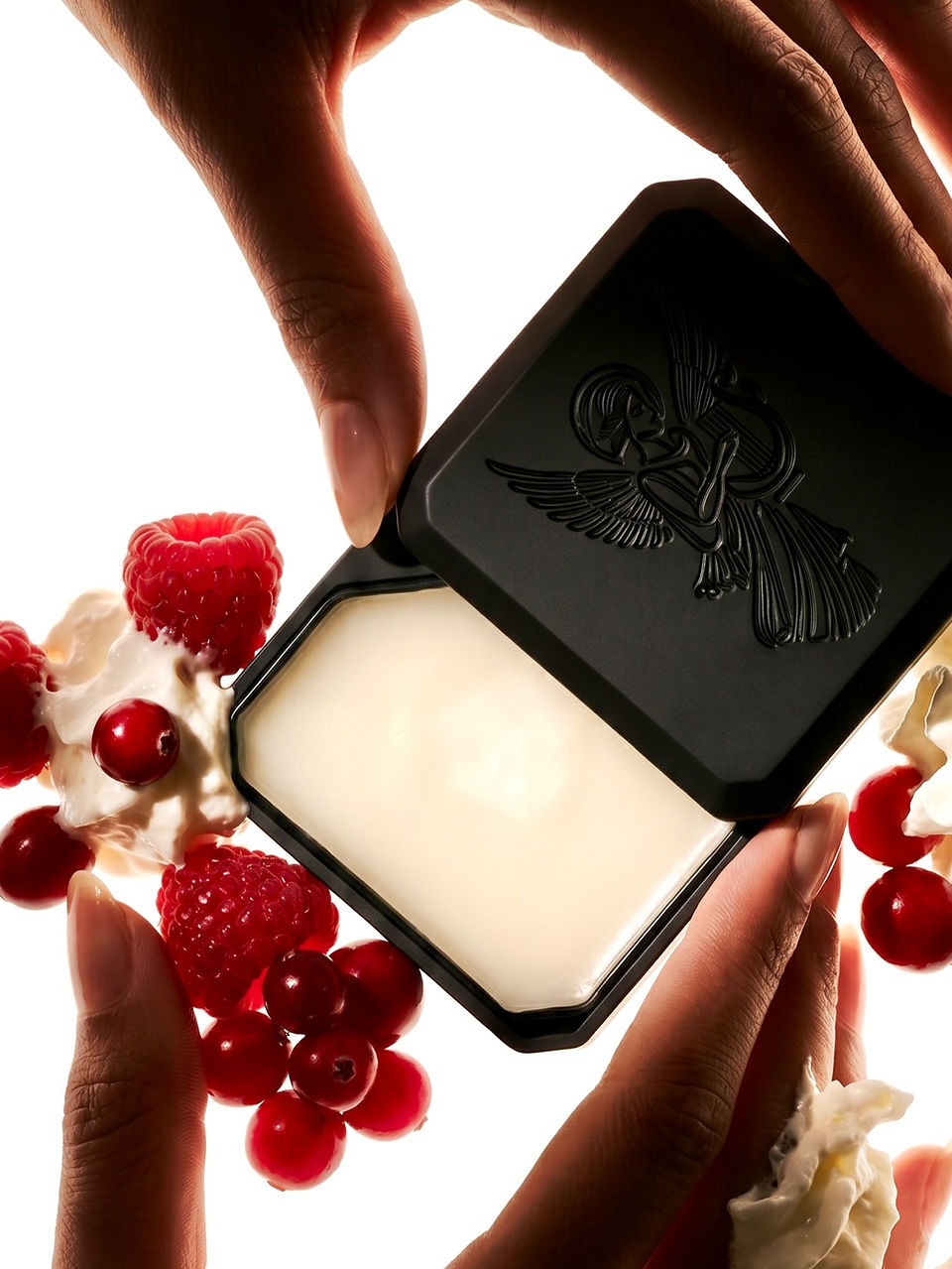
Fruit D’Amour by Alyra Nord Solid Perfume
But that does not mean perfumers cannot make them work. It simply takes considerably more formulation expertise. Though it is challenging to curate airy fruity notes in solid perfumes because they tend to evaporate faster, perfumers layer the fragrance with either a heavy dry-down scent like vanilla or tweak the formulation as needed.
Conscious Consumption
Aside from the scent profiles, perhaps the biggest win is sustainability. Solid perfumes are devised as a solution to the massive carbon footprint generated by the industry at large, as they are not intended for mass production. While traditional perfumes go heavy on the packaging with glass bottles and plastic pumps, solid perfumes are generally housed in reusable or biodegradable packaging.
As Sahar Mansoor explains, "No water in the formula means no unnecessary bulk, no plastic bottle to contain it, no preservatives to stabilise it. When you remove water from a product, you remove weight. And when you remove weight across thousands of units moving through a supply chain, you meaningfully reduce the carbon footprint of every single shipment."
That said, sustainability ultimately depends on how a product is made, packaged and refilled. While solid perfumes have the potential to reduce waste, their environmental impact varies from brand to brand. Whether they become the future of fragrance remains to be seen.
So... should you buy one? If you are expecting solid perfumes to replace your favourite Eau de Parfum, probably not. If you are looking for a beautiful, travel-friendly fragrance that feels personal, understated and quietly luxurious, then absolutely.


Comments