
What’s Hot in Art This April: The Must-See Art Shows In Delhi and Mumbai


As April unfolds, India’s cultural landscape comes alive in vivid colours, textures and thoughts across Delhi and Mumbai. Galleries, museums and independent art spaces are opening their doors to exhibitions that move beyond mere display, inviting viewers to conversations around memory, identity, history and human experience. With World Art Day celebrated on April 15, the month takes on even greater significance, turning the city’s art calendar into a larger celebration of creativity and visual storytelling.
For those looking to experience the cultural pulse of the country’s two most dynamic cities, this month offers the perfect reason to step into their art spaces. From deeply personal solo exhibitions and landmark retrospectives to immersive installations and thought-provoking group shows, these galleries become destinations worth visiting in their own right. Whether one is an avid art enthusiast or simply seeking an enriching way to explore the city, these shows offer moments of pause, reflection and discovery. Here are the art shows across Delhi and Mumbai, making April a month-long celebration of art.
Through The Artist’s Eye — Stuart Robertson

27 April – 3 May 2026
Bikaner House Centre for Contemporary Art (CCA), New Delhi
British artist Stuart Robertson’s Through The Artist’s Eye brings one of the month’s most moving exhibitions to Delhi. Created during an 18-month residency at Dr Shroff’s Charity Eye Hospital in Daryaganj, the show spans photography, drawing, bronze sculpture and cyanotype, offering an intimate portrait of one of India’s most respected charitable eye institutions.


At its heart lies the idea of sight — both literal and metaphorical. While vision is restored daily through the work of surgeons and caregivers, Robertson approaches sight as an act of patience, attention and empathy. From monochromatic photographs capturing operating theatres, waiting rooms, trainee surgeons, nurses, gardeners and security staff to delicate cyanotypes developed through sunlight, every work circles back to the miracle of seeing. The exhibition also opens up conversations around blindness, healing and shared humanity, making it particularly significant in the context of World Art Day.
Points of Cont(act) — Sehaj Malik

29 March – 19 April 2026
Method, Defence Colony, New Delhi
At just 22, Sehaj Malik’s solo exhibition at Method Delhi marks an exciting moment for emerging contemporary art. Curated by Sahil Arora, Points of Cont(act) positions the body as both instrument and active force within architectural space. At the centre of the exhibition is To the Cosmos and Back in 29 Steps, a durational, site-specific work produced through a rigorously timed process where Malik worked within fixed factory-like shifts. Using charcoal and her own body as a unit of measurement, the artist transforms gesture, breath, endurance and fatigue into marks across the gallery walls and floors.

The result is a striking intersection of body and machine, where drawing becomes choreography, labour and memory. The exhibition reflects Method’s commitment to supporting experimental young practices and invites viewers into a process-driven experience rather than a static visual outcome.
Houses I Almost Lived In — Mahen Perera, Pooja Iranna, Raj Jariwala, Samit Das, and Shalina Vichitra

April 23 - May 25
LATITUDE 28, Defence Colony
Houses I Almost Lived In brings together five artists who explore how spaces and buildings stay with us, even after we leave them. Instead of just showing architecture, their works focus on how places become part of our memories and emotions over time.

Through sculptures, maps, and mixed materials, the artists look at ideas of home, city life, loss, and change. They show how cities are constantly built and rebuilt, yet still leave traces in our minds. The exhibition highlights how architecture is not just physical—it shapes how we feel, remember, and belong. Overall, it invites viewers to slow down and think about their own connection to spaces, and how places continue to live within us, even when they no longer exist.
The Indian Picturesque: Landscape Painting 1800–1850

28 March – 2 May 2026
DAG, 22A Windsor Place, Janpath, New Delhi
DAG’s latest exhibition offers a rare and fascinating look into India’s landscape traditions during the early 19th century. Curated by Giles Tillotson, The Indian Picturesque: Landscape Painting 1800–1850 brings together British and Indian landscape paintings for the first time, highlighting a shared artistic language between the two.


Featuring oils, watercolours and ceramics, the exhibition captures rural vistas, grand structures and the visual memory of an India before modernisation. With works from British painters as well as artists from the Murshidabad and Thanjavur schools, the show explores how landscape painting became a powerful site of artistic exchange.
A Fistful of Sky — Subodh Gupta

Image Credits: ELLE India
3 April – 17 May 2026
Art House, Nita Mukesh Ambani Cultural Centre, Bandra East, Mumbai
One of Subodh Gupta’s most ambitious exhibitions to date, A Fistful of Sky unfolds across the Art House at NMACC as a journey through memory, migration, belonging and home.

Curated by Clare Lilley, the show includes the India debut of Nine Stupa and the first full public presentation of Kingdom of Earth (2017–22). Through his signature use of stainless steel, brass and aluminium, Gupta turns everyday materials into philosophical meditations on identity and aspiration.
The Hindi title Ek Mutthi Aasman lends the exhibition a deeply poetic quality, echoing the dream of claiming one’s share of the future. In a city like Mumbai, shaped by movement and ambition, the exhibition feels especially resonant.
Reverie. Pause. Rupture — Group Show

2 April – 2 May 2026
Anant Art, Safdarjung Enclave, New Delhi
Curated by Gayatri Sinha, Reverie. Pause. Rupture explores the shifting states of human experience through art.
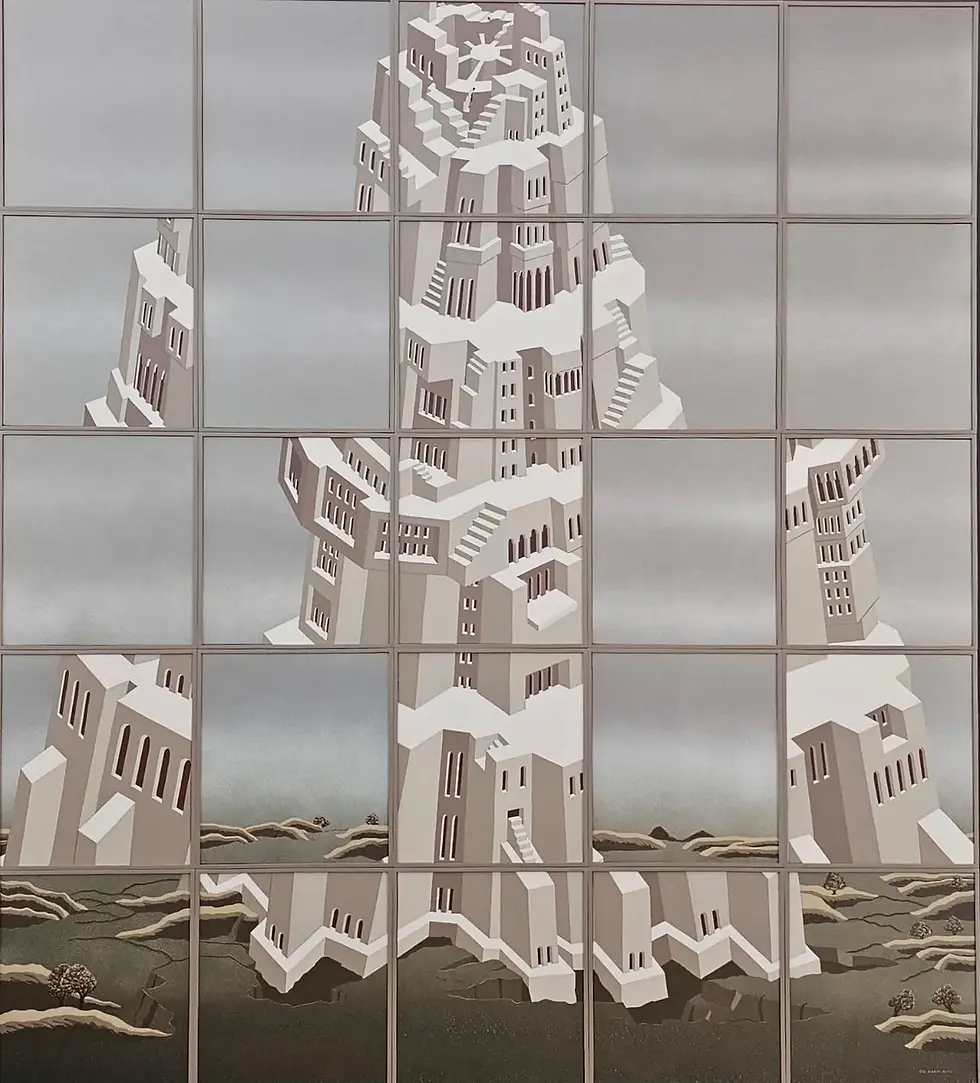
The exhibition brings together works by artists including Aban Raza, Anju Dodiya, Gigi Scaria, Prajakta Potnis, Ranbir Kaleka, Shakuntala Kulkarni and Vasudha Thozhur. Through themes of dreaming, stillness and disruption, the show examines how moments of pause and rupture can reshape the way we perceive the world.
Raghubir Singh: Bombay

12 March – 25 April 2026
Jhaveri Contemporary, Mumbai
A pioneer of analogue colour street photography, the late Raghubir Singh’s solo exhibition chronicles Bombay from the late 1970s to the mid-1990s.

Image Credits: Jhaveri Contemporary
The photographs are vibrant, layered and occasionally surreal, capturing the city’s many energies and contradictions. More than a visual archive, the exhibition becomes a portrait of Bombay’s soul through Singh’s lens.
Once Upon a Sculptor — K.S. Radhakrishnan

21 March – 30 April 2026
Chawla Art Gallery, Square One Mall, Saket, New Delhi
This retrospective offers a sweeping view of K.S. Radhakrishnan’s decades-long sculptural practice.
Known for his iconic Maiya and Musui figures, the artist brings together older and newer works in a single exhibition that reflects the emotional and formal depth of contemporary Indian sculpture. The show traces the evolution of one of India’s most celebrated sculptors and offers viewers a rare deep dive into his oeuvre.
What Form Retains — Mayur Kailash Gupta

18 March – 20 April 2026
LATITUDE 28, Defence Colony, New Delhi
Presented by Bhavna Kakar, What Form Retains showcases a powerful body of sculptural and relief works by Baroda-based artist Mayur Kailash Gupta. Working with bronze, stone, wood and paper pulp, Gupta explores geometry, materiality and balance through disciplined abstraction. His works focus on spatial equilibrium, proportion and containment, transforming sculpture into a way of thinking about void, density and time.As Bhavna Kakar notes, the works possess a “rare quiet authority,” inviting viewers to slow down and engage with stillness.
Shadows of Empire — Jit Chowdhury and Kaushal Parikh

21 March – 19 April 2026
47A Khotachiwadi, Mumbai
This exhibition began with a shared love for craft in Jit’s work and slowly grew into a creative exchange with KP. It is inspired by Khotachi Wadi, a village that feels deeply personal to both artists. Set inside a restored 19th-century Portuguese-style home, Shadows of Empire offers a layered reflection on Khotachiwadi’s colonial history.

Through collages, photography and mixed media, artists Jit Chowdhury and Kaushal Parikh reinterpret the neighbourhood’s fading architecture, everyday life and cultural memory shaped by Portuguese and British legacies. Coming from cities like Kolkata and Mumbai, both influenced by strong historical powers, they reflect on how design, culture, and architecture carry traces of these pasts.The venue itself adds to the experience, making this one of Mumbai’s most atmospheric exhibitions this month.
Space Making: Making Space — Group Show


21 March – 25 April 2026
Gallery Art Motif, Safdarjung Enclave, New Delhi
Curated by Kunal Shah, this interdisciplinary group exhibition brings together artists, architects and designers to explore how space is imagined and reshaped. Moving across architecture, textiles, photography and sculpture, the show examines space as an active, evolving construct informed by memory, materiality and presence.
Narratives in Transit — Akanksha Patil


27 March – 27 April 2026
Gallery Art Positive, Lado Sarai, New Delhi
Akanksha Patil’s solo exhibition explores migration, identity and displacement through installation, found materials and video. Drawing from Shivangaon village and its transformation through urban expansion, the works reflect on the erosion of community ties and cultural memory, offering a poignant look at the human cost of development.
प्रक्रिया / Process — Group Show
22 April – 23 May 2026
Shrine Empire, Defence Colony, New Delhi
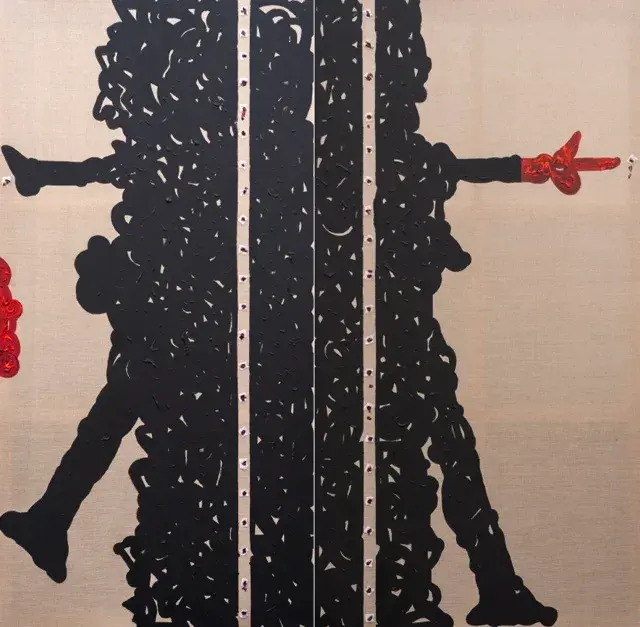
Marking the inauguration of Shrine Empire’s new gallery space, प्रक्रिया / Process foregrounds artistic process as both method and meaning. The exhibition brings together artists whose practices are rooted in research, material experimentation and conceptual engagement within a South Asian context.


Comments